
Building a startup requires a clear roadmap, but trying to write a massive 40-page business plan before you launch can stall your progress. Many founders rush straight into building products, designing features, and branding without answering the most critical question: How will this business actually generate revenue?
According to research from CB Insights, the number one reason startups fail is a lack of market need. In fact, a massive percentage of failed businesses falter simply because nobody actually wanted what they built.
To give your venture the absolute best chance to succeed, you need a fast, dynamic way to test your assumptions before spending a single dollar. That is exactly where a business model canvas template comes in.
Watch the Video Guide: Business Model Canvas Rapid Business Planning
In the video below, Brent Whistler founder of BuildRunKit, breaks down exactly how to take a first pass at your business planning in under 20 minutes. He shares how legendary companies like Uber, Airbnb, and Spotify used this exact single-page visual framework to align their operations before launch.
Watch the deep dive and follow along using his imaginary coffee cart example, the BusyBuzz Cafe:
What is the Business Model Canvas?
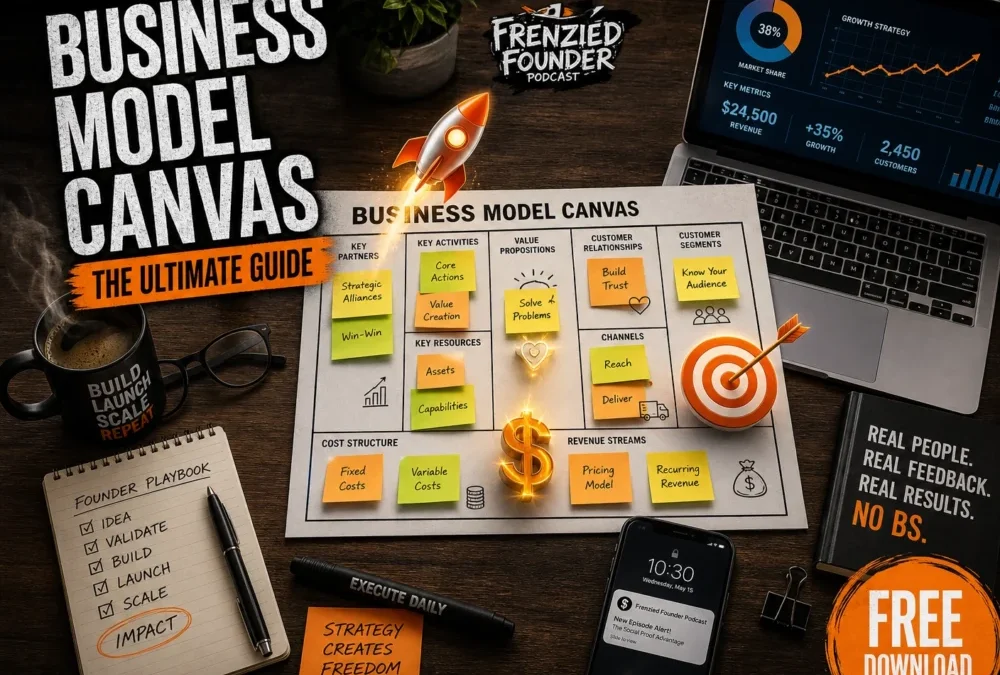
Created by Alexander Osterwalder after a decade of deep research, this strategic tool condenses your entire operational map into nine clear, interconnected building blocks on a single page.
When you utilize a template for business model canvas planning, you are forced to look at how different parts of your company connect. For instance, your cost structure must align perfectly with your daily activities, and your value proposition must solve a real problem for your chosen customer segments. Seeing these visual links allows you to spot and fix mistakes long before you ever launch.
Breaking Down "Each of the 9 Boxes" in a Business Model Canvas
Over the coming weeks, we are going to publish an in-depth guide on every single one of these building blocks. Here is a quick snapshot of what they cover:
- Customer Segments: The distinct groups of people or organizations your company aims to serve.
- Value Propositions: The unique bundle of products, services, and benefits that solve problems and create value for your audience.
- Channels: The communication, distribution, and sales networks you use to deliver your core value to buyers.
- Customer Relationships: The specific types of interactions, bonds, or loyalty perks you establish with each segment.
- Revenue Streams: All the different ways your company can monetize its offerings and bring in cash.
- Key Resources: The critical physical, human, intellectual, or financial assets required to make your model work.
- Key Activities: The daily operational actions your team must execute to deliver on your promise.
- Key Partners: The network of suppliers, alliances, and organizations that help reduce risk and optimize operations.
- Cost Structure: All the fixed overhead and variable expenses incurred to run your business model.
Don't Let Perfection Impede Your Execution
Your canvas is designed to be a flexible, living document. You do not need to have flawless answers before you start. Take a quick first pass using what you already know, and then step out to talk to real customers and partners to iterate over time.
To help you map this out, we have built a comprehensive planning resource pack. This download features an editable business model canvas Word template for quick updates, professional business model canvas PowerPoint slides for investor pitches, and high-quality business model canvas PDF sheets for printing. It serves as a powerful business model canvas creator to keep your team aligned.
👉 Download your free templates and resources here: BuildRunKit Business Model Canvas Resources
(Note: When you download the presentation pack, you can also opt-in to be notified as soon as our upcoming, comprehensive business planning course officially launches!)
What's Next?
This framework is your strategic map. In our next article, we will dive straight into the very first foundational block: Customer Segments.